
Beetles
- Home
- Beetles
Beetles
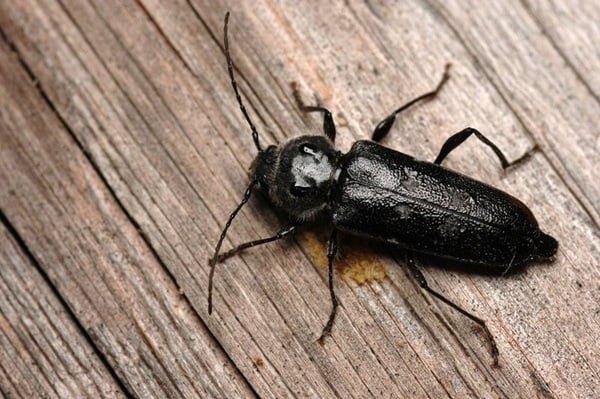

What are beetles?
Beetles belong to the order Coleoptera, the largest group of insects, with over 300,000 known species. While they are often mistaken for bugs, beetles differ in key ways: true bugs have specialized mouthparts for piercing and sucking, while beetles have strong, chewing mandibles.
Although many types of beetles play beneficial roles in ecosystems, some can become nuisances when they invade homes. Certain species may even cause structural damage or harm belongings, making professional intervention necessary. Here are some of the common topics we get asked about beetles that we’ll answer for you here:
What are the differences between bugs and beetles?
Beetles and true bugs are both insects, but they belong to different orders and have distinct characteristics:
1. Mouthparts:
Beetles have strong, chewing mouthparts (mandibles) used for biting and grinding food.
True bugs have specialized, piercing-sucking mouthparts designed for extracting fluids from plants or other insects.
2. Wings:
Beetles have hardened forewings called elytra that cover and protect their membranous hind wings.
True bugs have hemelytra, which are partially hardened at the base and membranous at the tips.
3. Metamorphosis:
Beetles undergo complete metamorphosis (egg → larva → pupa → adult), with distinct larval stages.
True bugs undergo incomplete metamorphosis (egg → nymph → adult), where young nymphs resemble smaller versions of adults.
4. Feeding habits:
Beetles have diverse diets, with species that feed on plants, fungi, decaying matter, or other insects.
True bugs primarily feed on plant sap or other insects.
While both groups are diverse and widespread, these differences help distinguish beetles from true bugs in the insect world.
What do beetles look like?
The order name Coleoptera means “folded wing,” which is a fitting description of these insects. Beetles can differ greatly in color, shape, and size—ranging from tiny, iridescent species to large, robust ones with textured or patterned exoskeletons.
But what does a beetle look like? Despite their diversity, they all share key characteristics:
Six legs
A segmented body consisting of a head, thorax, and abdomen
Well-developed antennae
Strong mandibles that they use for crushing food, burrowing, or even fending off predators
Can all beetles fly?
Not all types of beetles can fly, even though most have wings. Strong fliers like ladybugs and June beetles use their hardened elytra for protection and unfold their wings to take off. Others, like ground beetles and darkling beetles, have wings but rarely fly, relying on speed instead. Some species, such as blister beetles and certain weevils, have fused elytra, making them completely flightless. Aquatic beetles, like diving beetles, can fly but primarily use their wings to trap air for underwater breathing. Each species has adapted to its environment through flight, speed, or defensive strategies.
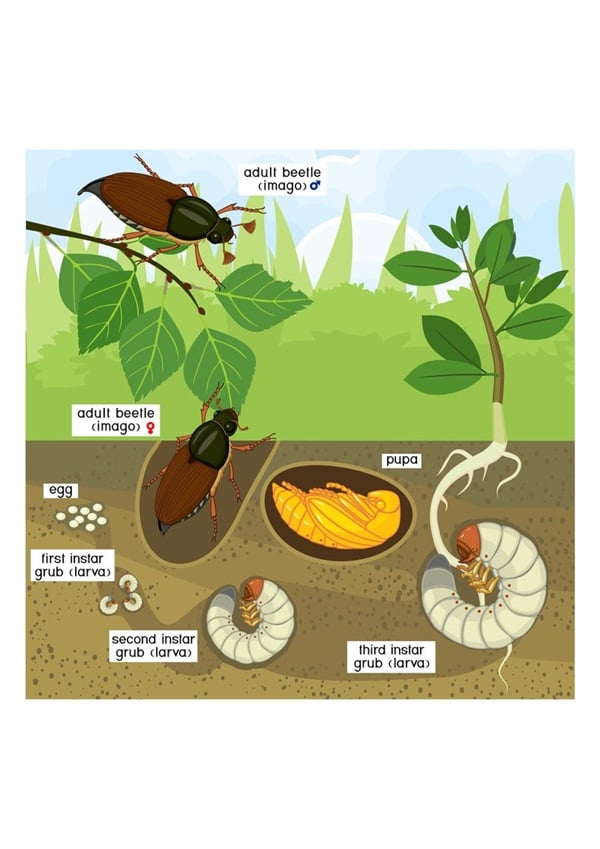
Beetle reproduction and life cycle
Beetles undergo complete metamorphosis with four stages: egg, larva, pupa, and adult.
Eggs: Laid in rotting wood, soil, or decaying matter, often in clusters.
Larva: Grub-like and can molt up to ten times over weeks to months before pupating.
Pupa: Enclosed in a cocoon, this stage lasts weeks to years, depending on the species.
Adult: Once they emerge from their cocoon, beetles focus on mating and reproduction.
Beetle social structures vary widely by species. Most are solitary, living and foraging alone, while some, like certain dung beetles, show cooperative behavior in caring for their offspring. A few species, such as ambrosia beetles, exhibit colony-like structures where individuals work together. Beetles are typically nocturnal and rely on their keen senses of smell and touch to find food, mates, and shelter.
Common types of beetles
There are over 300,000 beetle species worldwide, with 30,000+ in North America, each with unique traits. For example:
American spider beetles stay outdoors but may invade homes, feeding on dry goods, leather, and more. Their larvae cause the most damage.
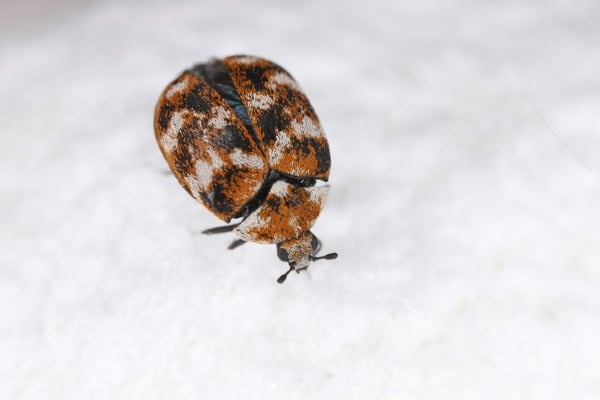
Carpet beetles don’t harm humans but destroy clothing and natural fibers as larvae voraciously feed.
Larder beetles seek food sources like meat, cheese, and even dead insects, where they lay eggs. They’re even used in museums to clean animal skeletons.
Other common beetles include:
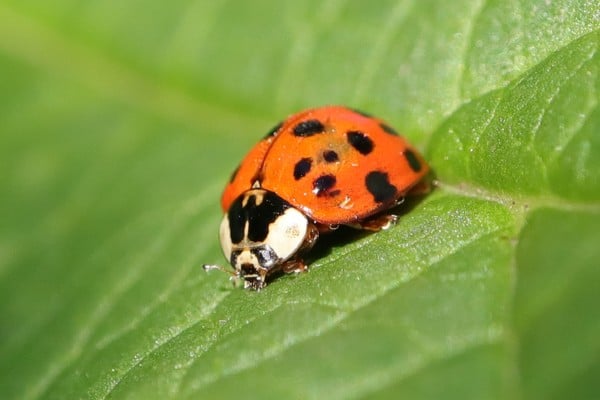
Asian lady beetle (Harmonia axyridis)
Asian longhorned beetle (Anoplophora glabripennis)
Blister beetle (Meloidae)
Burying beetle or sexton beetles (Nicrophorus)
Dung beetle (Scarabaeidae)
Firefly (Lampyridae)
Flour beetle (Family: Tenebrionidae)
Furniture beetle (Anobuim punctatum)
Grain beetle (Oryzaephilus)
Japanese beetle (Popillia japonica)
June bug (Melolonthinae)
Lady bug (Coccinellidae)
Pantry beetle (Order: Coleoptera)
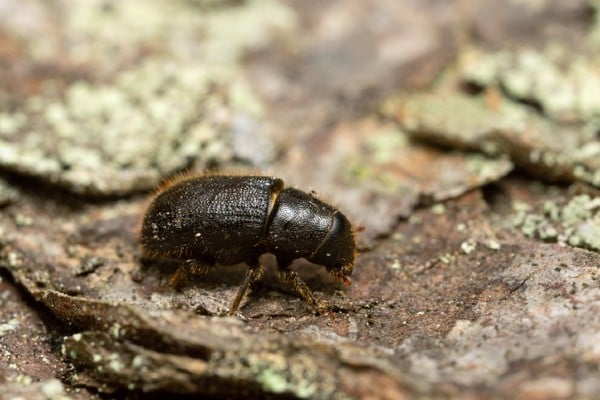
Powderpost beetle (Bostrichidae)
Scarab beetle (Scarabaeidae)
Are beetles harmful to humans or pets?
You may now be wondering, “Are beetles dangerous?” They are generally not dangerous but can contaminate food and surfaces. Blister beetles secrete cantharidin, which causes painful skin blisters.
Most beetles are harmless to pets, even if they’re eaten. However, some beetles, such as Asian lady beetles, blister beetles, and bombardier beetles, secrete toxic chemicals when ingested, causing a reaction similar to a chemical burn.
Do beetles sting or bite?
While beetles have mouth parts capable of biting people, they rarely do. However, if you irritate a blister beetle, stag beetle, or longhorned beetle, it may bite you.
What problems do beetles cause in homes?
The damage a beetle infestation can cause depends upon the type of beetle and the extent of the infestation. Wood-eating beetles can damage your home’s structure, while carpet beetles can damage clothing and other natural fibers. Other beetles can also strip your trees of vegetation.
How do I get rid of beetles in my home?
While you may not be able to eliminate every beetle from your home, there are some steps you can take to help get rid of them:
Regularly vacuum, sweep, and clean out your pantry and kitchen area.
Keep trash cans sealed.
Reduce the number of outdoor lights you use.
Eliminate yard waste and debris where beetles can hide.
Inspect kitchen pantry areas periodically for evidence of beetles and dispose of any infested products found.