
Weevils explained
- Home
- Weevils explained
Weevils explained

Weevils explained: Behavior & characteristics
Weevils hiding out in your kitchen pantry is a surprise no homeowner wants. Read more to learn about the weevil bug, its behavior, its habitat, and how to exterminate weevils if you have an infestation.
Jump to section:
Weevil identification
How long do weevils live?
Weevil habitats
Weevil diet
The impact of weevils
Weevil control and prevention: How to exterminate weevils
What to do if you find weevils in your food
Weevil identification
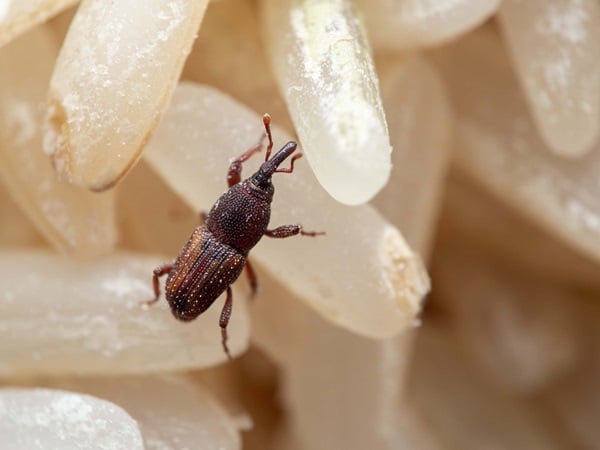
What are weevils? Weevils are very small beetles, often less than a quarter of an inch, that are attracted to crops and dry foods. Most have the ability to chew through paper in order to access a food source in homes or storage areas. These pests are typically pear-shaped with six legs, two short, folded antennae, and a distinctive snout-like mouthpiece. Their colors vary widely—reddish-brown, black, green, or beige—though most are brown or gray. Among the more than 60,000 different types of weevil beetles worldwide, three common species are the bean weevil, rice weevil, and boll weevil.
Bean weevil
Size: One-sixth of an inch
Color: Olive-brown with brown or gray spots on wing covers
Habitat: Infests whole beans and other legumes, often found in storage or on crops
Rice weevil
Size: One-eighth of an inch
Color: Dark brown with light-colored patches on wing covers
Habitat: Bores into rice kernels to breed, found in stored rice in homes or agricultural facilities
Boll weevil
Size: Nearly one-quarter of an inch
Color: Black, gray, or reddish-brown
Habitat: Feeds exclusively on cotton bolls, infests cotton plants but not finished cotton products
How long do weevils live?
On average, when weevil bugs reach adulthood, they can live for about two to three months. This can vary by species. While weevils tend to have shorter life spans, they can lay a large number of eggs during this short period. Natural predators of weevils include larger insects such as beetles and spiders, as well as birds or rodents that eat weevil-infested crops or seeds. How fast do weevils reproduce? Here’s what the weevil life cycle looks like:
Egg laying: Eggs are laid in or near the host plant or food source.
Larvae stage: Lasts around two months. Larvae hatch and burrow, feeding on plant roots or stored foods for about two months.
Pupal stage: Form a cocoon for around three weeks to change into adults.
Adult stage: Adults emerge to feed on above-ground parts of plants or stored foods
Weevil habitats
From farm fields to your kitchen pantry, weevils make their home wherever their preferred food source is. Outdoors, weevils are a significant pest for the agricultural industry but can also live in backyard gardens or in fruit trees. Inside homes, they will seek out stored foods or moist areas like sinks or bathtubs. They thrive in warm conditions and mature faster in high temperatures, while colder temperatures slow their development and reduce their ability to survive.
Weevil diet
If you encounter a weevil in your home, they are most likely to be attracted to stored grains in your kitchen pantry. Still, there are thousands of types of weevils with varied diets that are attracted to different types of food sources. Here are the most common food sources for weevils:
Fruits and nuts: Fruits with large seeds, such as peaches, pears, apples, and plums on trees, as well as tree nuts like acorns or hickory nuts, can attract weevils.
Seeds and grains: In kitchen pantries or other dry food stores, weevils will feed on flour, pasta, rice, dried beans, and cereal.
Plant roots: Weevils feed on plant roots, including crops like cotton, corn, and legumes, flower roots such as lilacs and peonies, and tree roots like evergreens.
The impact of weevils
Weevils have a voracious appetite, and when left unchecked, they can do real damage to crops and stored food products—making a big economic and agricultural impact. Weevils eating into crops such as grains, cotton, and legumes can reduce yields, decimate stored dried foods, and result in financial losses for farmers, food processing facilities, and granaries. However, there are ways weevils can be used for good. Some weevil species are used in biological control programs to manage invasive plant species as a natural way to balance out ecosystems and minimize the need for chemical pesticides.
That’s how weevils affect the agricultural industry, but what about your home? First, take a look at your backyard. Weevils can destroy garden plants by feeding on their roots, which can stunt growth and reduce the overall health of some plants. Not great news for a prized vegetable garden or landscaping around your home. A weevil infestation can also be a pantry nightmare. Weevil-infested grains can become sticky, moist, and may even sprout, making them unusable. That all leads to wasted food and extra time you have to spend on the clean-up.
Weevil control and prevention: How to exterminate weevils
While does not offer services for weevil extermination, there are effective ways to manage and prevent a weevil infestation in your home. Here are some practical tips:
Throw away any infested foods to prevent spreading.
Freeze any foods you suspect might be infested at zero degrees Fahrenheit for six days to kill weevils.
Clean cabinets and shelves where infested foods were stored by vacuuming and washing with soap and water.
Store dried food goods in glass or plastic containers with tight lids to prevent or contain any infestations.
Some foods can be refrigerated to reduce the risk of pest problems.
Use older food products before newer ones to prevent long-term storage, which can lead to infestations.